
The Legal Chronology Is Only as Reliable as Its Dates: How Case, Filing, Exhibit, and Correspondence Records Should Be Structured
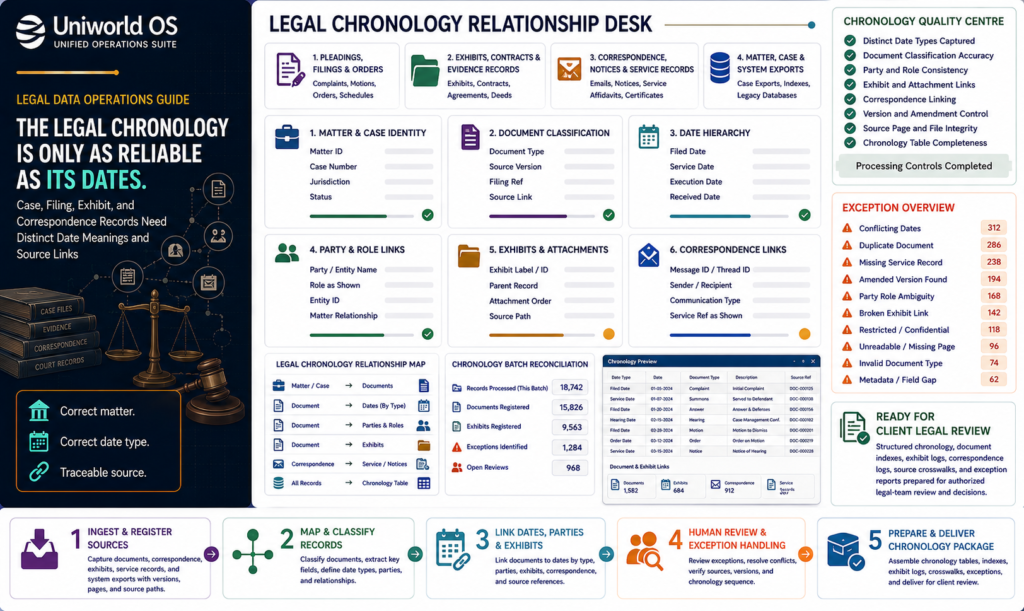
A practical guide to legal chronology data entry and document indexing—covering matter and case identity, document classification, party roles, filing, service, execution, issue, receipt and hearing dates, exhibits, correspondence, source links, confidentiality, duplicate review, human QA, archive remediation, migration, exceptions, and reconciliation.