
A Complete Loan File Is Not the Same as a Review-Ready Loan File: How Applications, Income Records, Property Documents, Conditions, and Exceptions Should Be Organized
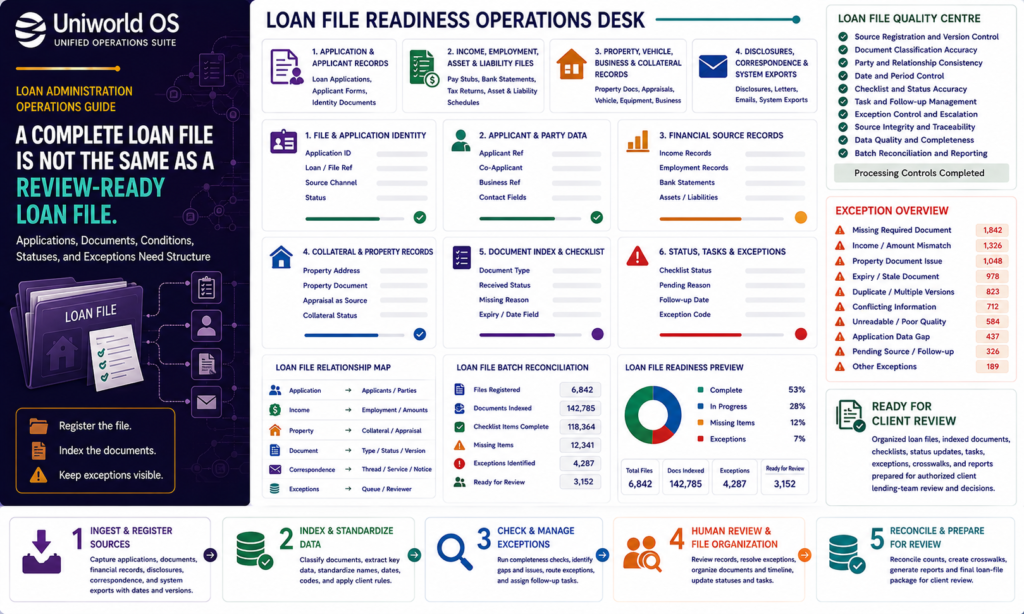
A practical guide to administrative loan-file readiness—covering application identity, applicant and business records, income, employment, asset and liability documents, property or collateral references, document taxonomy, checklist statuses, versions, tasks, follow-ups, correspondence, exceptions, privacy, human QA, migration, and reconciliation.
Bad Master Data Travels with the Migration: How to Clean Customer, Supplier, Product, and Operational Records Before Cutover
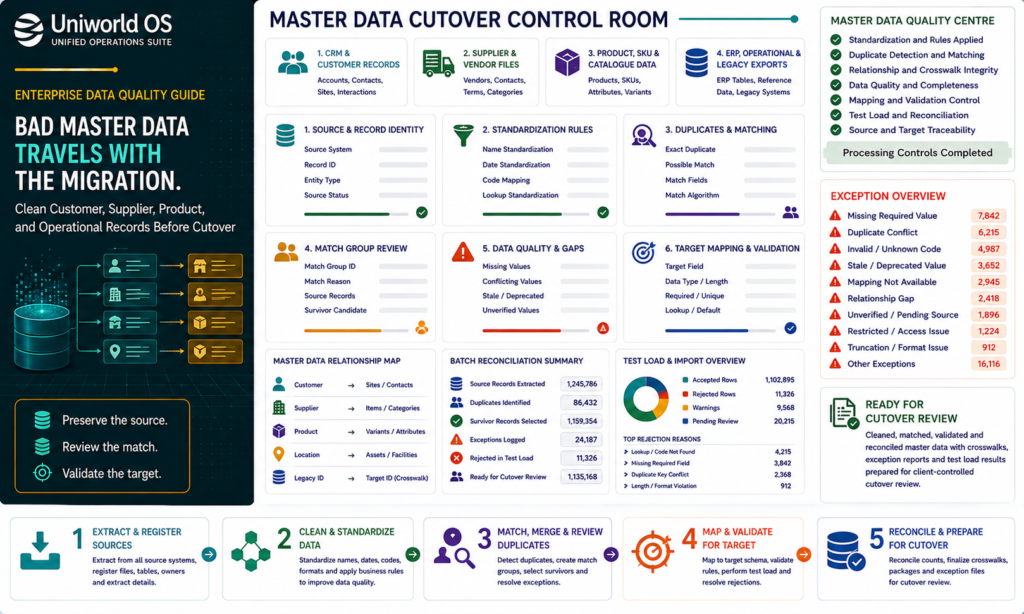
A practical guide to pre-migration master-data cleanup—covering source inventory, entity identity, standardization, duplicate matching, survivor-record review, missing and stale values, source conflicts, customer, supplier, product and operational relationships, legacy-to-target crosswalks, human QA, target-schema validation, import testing, exceptions, and cutover reconciliation.
The Legal Chronology Is Only as Reliable as Its Dates: How Case, Filing, Exhibit, and Correspondence Records Should Be Structured
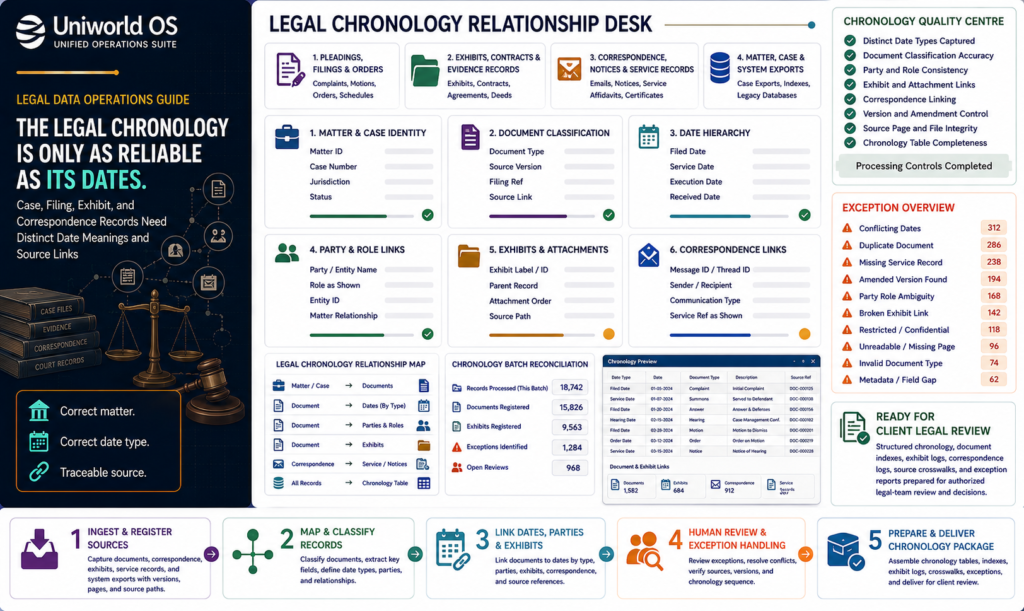
A practical guide to legal chronology data entry and document indexing—covering matter and case identity, document classification, party roles, filing, service, execution, issue, receipt and hearing dates, exhibits, correspondence, source links, confidentiality, duplicate review, human QA, archive remediation, migration, exceptions, and reconciliation.
A Lab Result Is More Than a Number: What Medical Data Entry Must Preserve Before Database Import
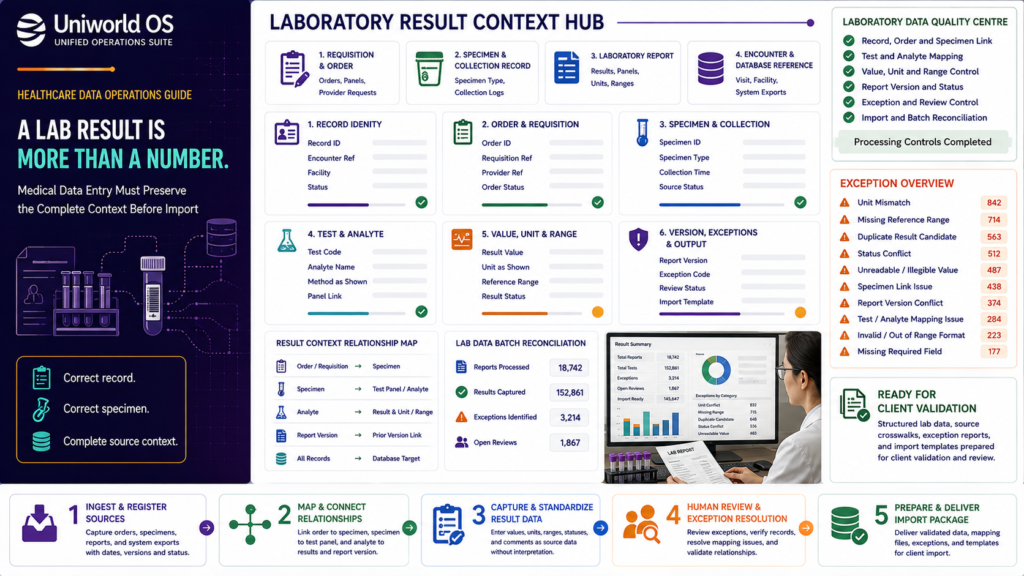
A practical guide to laboratory-report data entry and indexing—covering patient or member and encounter identity, orders and requisitions, specimens, panels, tests, analytes, result values, units, reference ranges, flags, statuses, comments, report versions, privacy, human QA, migration, import validation, exceptions, and reconciliation.
What Makes a Manufacturing Work Order Traceable After Production Ends?
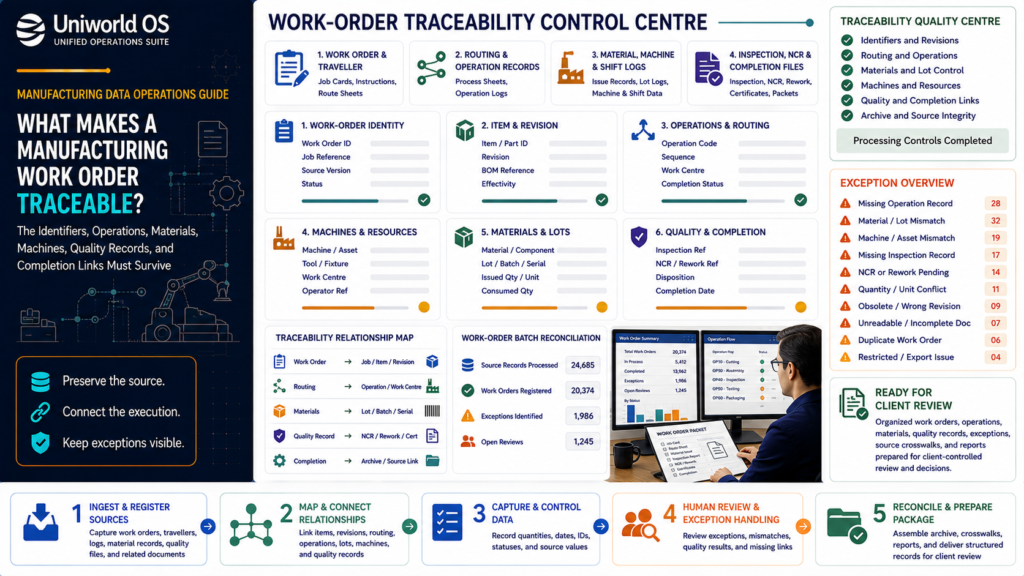
A practical guide to manufacturing work-order traceability—covering source authority, work-order identity, item and revision context, operation sequences, machine and shift references, material lots, quantities and units, inspections, NCRs, completion records, human QA, archive remediation, migration, security, exceptions, and reconciliation.