
A Document Can Look Correct and Still Be Structurally Wrong: What XML Conversion Must Preserve Beyond Text
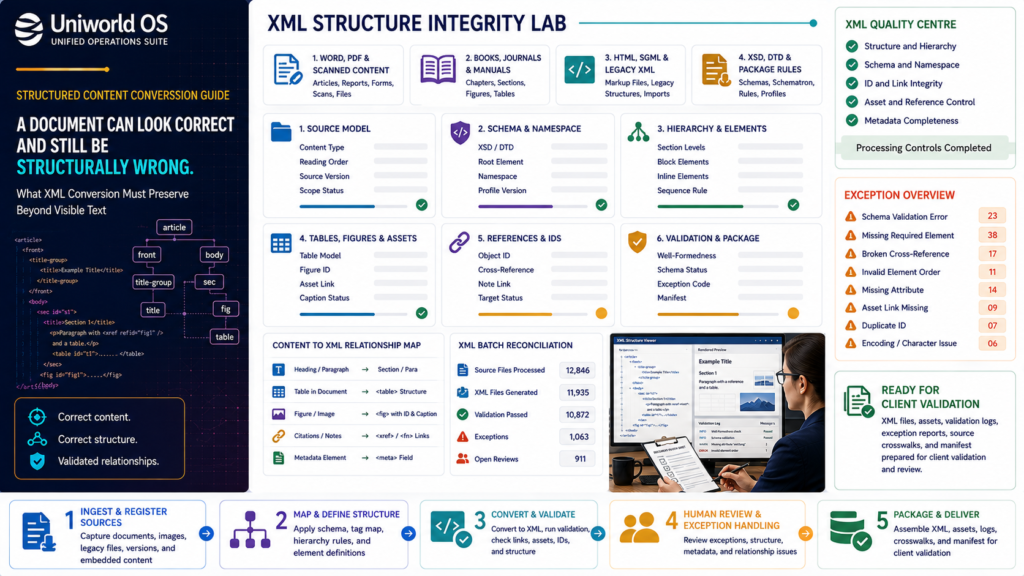
A practical guide to the structural relationships behind XML conversion—covering source-to-schema mapping, hierarchy, semantic elements, attributes, namespaces, identifiers, tables, figures, equations, notes, references, metadata, encoding, assets, validation, human QA, exceptions, and reconciled delivery packages.
Where Race-Day Photo Matching Goes Wrong: Bib Visibility, Multiple Runners, Occlusion, and Gallery Metadata
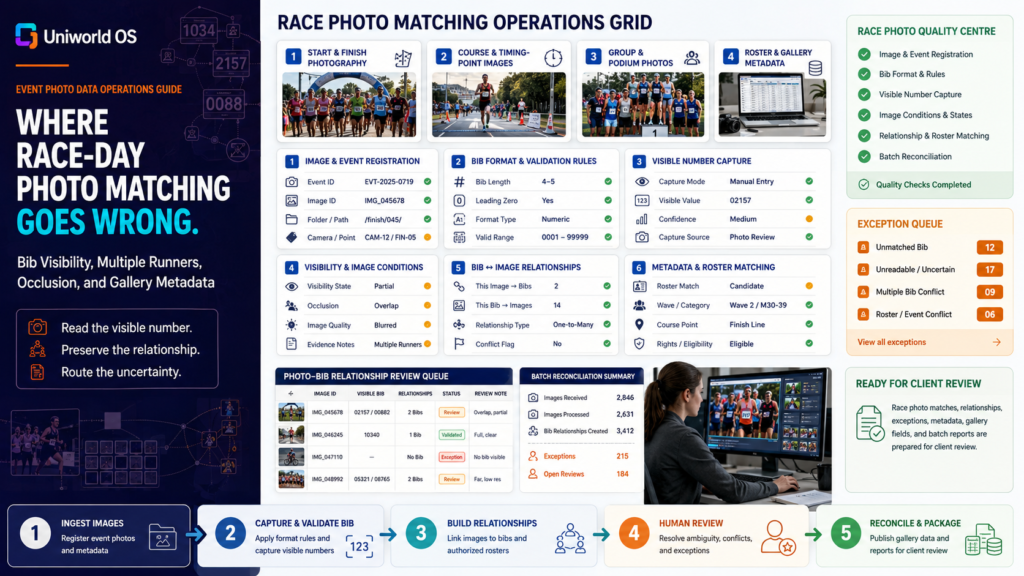
Uniworld OS Event Photo Data Operations Guide Where Race-Day Photo Matching Goes Wrong. Bib visibility, multiple runners,occlusion, and gallery metadata need control. A visible race number is a source reference—not a biometric identity claim. Control image inventory, bib formats, multi-bib rows, partial values, roster references, metadata, exceptions, human review, and gallery delivery. RACE PHOTO MATCHING […]
The Invoice Is Not the Transaction: Why Accounts Payable Data Must Connect Vendors, Purchase Orders, Receipts, Taxes, and Approvals
A practical guide to the relationships behind accounts payable data—covering invoice intake, vendor identity, invoice lines, purchase orders, receipts, service records, currencies, source-tax fields, coding references, approvals, duplicate review, security, human QA, statement support, and reconciled accounting handoff.
Why Property Records Fail to Match Across Deeds, Mortgages, Tax Files, and Listing Systems
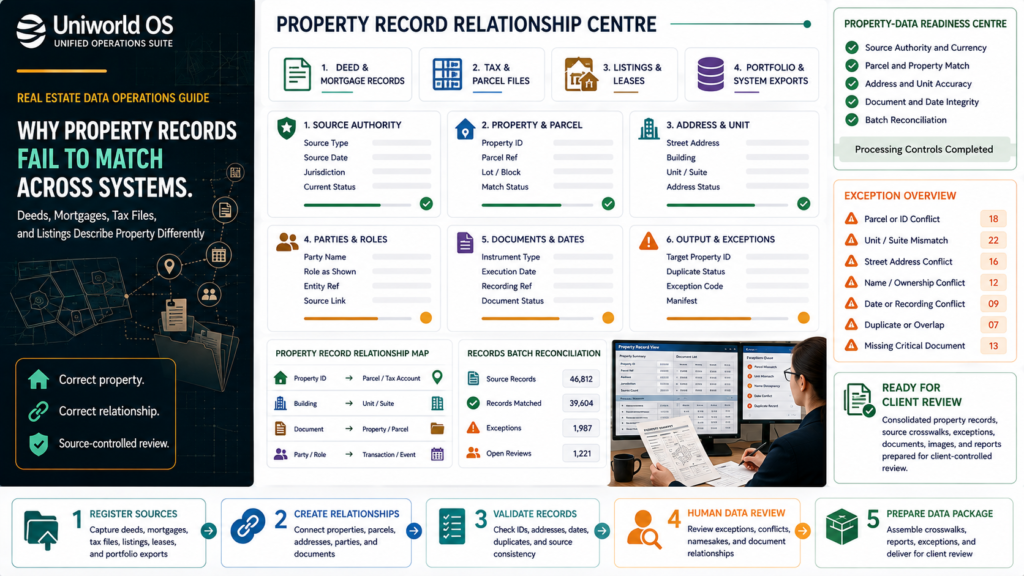
A practical guide to property-record matching across deeds, mortgages, tax files, listings, leases, public sources, and portfolio systems—covering source authority, parcel and address identity, building and unit hierarchy, parties, documents, dates, duplicate review, human QA, migration, privacy, and reconciled delivery.
Why Insurance Claim Intake Breaks Before Adjudication: The Records, Relationships, and Exceptions That Need Control
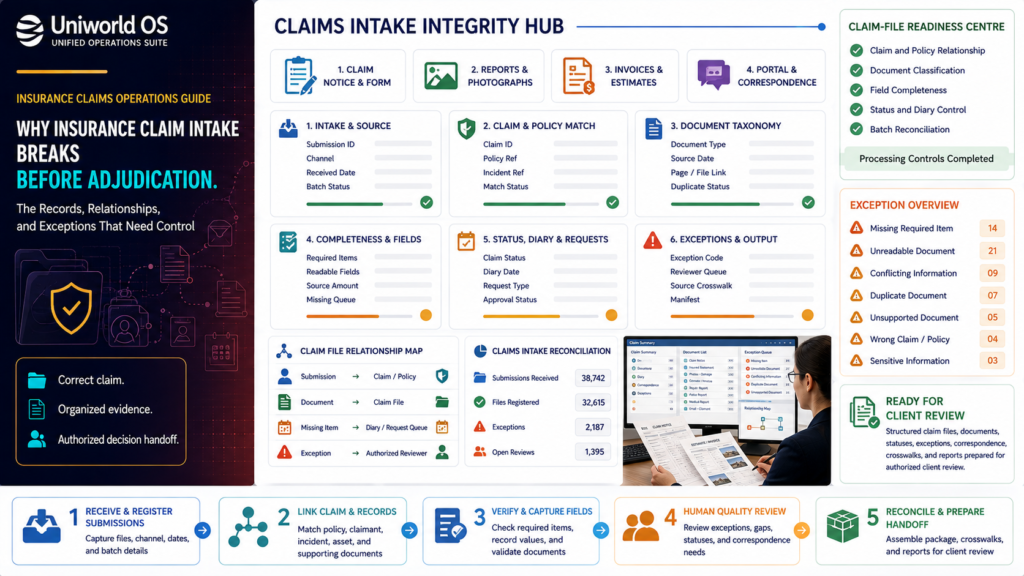
A practical guide to the administrative failure points inside insurance claim intake—covering source registration, claim and policy matching, document taxonomy, field capture, completeness review, statuses, diary queues, correspondence controls, duplicate review, human QA, privacy, exceptions, and reconciled handoff.