Annotation Services for AI and ML Models
importance of annotated datasets, impact on AI accuracy, high-quality training data, model precision improvement
High-quality, carefully annotated datasets are essential for any successful AI model. The accuracy and reliability of your AI system directly depend on the quality of training data you provide. Well-annotated datasets not only enhance the learning process but also significantly boost model precision and overall performance. By investing in top-tier annotation, you can dramatically improve your AI’s ability to make accurate predictions—ultimately setting your solutions apart from the competition.
Leveraging expertly curated datasets minimizes the risk of bias and reduces errors that could undermine user trust or lead to costly missteps. Consistent, high-quality annotation ensures your AI models are robust and adaptable across various real-world scenarios. This foundation empowers your technology to handle complex tasks with confidence, supporting innovation while safeguarding reliability. In a rapidly evolving industry where stakes are high, prioritizing premium data annotation is not just an advantage—it’s a necessity for achieving superior results and maintaining leadership in AI development.
Image Annotation
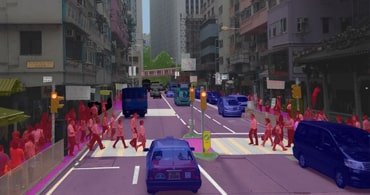
Image annotation is an essential task for computers in today’s digital era. It plays a key role in training models for computer vision, facial recognition, and many other visual AI applications. That’s why UniworldOS offers thorough and meticulous image labeling services to guarantee your models are trained with the highest level of precision and accuracy.
Tackle use cases such as:
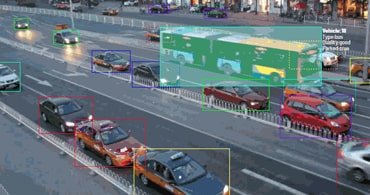
Object Detection: Accurately identifying and labeling objects within images is essential for advanced applications such as autonomous driving and security systems. By leveraging object detection technology, you can enhance safety, efficiency, and decision-making in these critical fields.
Facial Recognition: By carefully annotating facial features, we can greatly enhance both identification and verification processes. This step is crucial for achieving higher accuracy and reliability in facial recognition systems.
Image Classification: By labeling and categorizing images, you unlock powerful opportunities—like streamlining your e-commerce product catalog for easier navigation or enhancing social media algorithms to deliver more relevant content recommendations. Implementing image classification isn’t just beneficial; it’s essential for maximizing the value of digital platforms.
Video Annotation
Video annotation is a crucial process that involves labeling image sequences, or frames, to effectively train models for video analysis and recognition. By leveraging video annotation, you can significantly enhance computer vision capabilities across a wide range of applications—including surveillance systems, autonomous navigation, social media platforms, and emerging AR/VR technologies. Investing in precise video annotation is essential to unlock the full potential of intelligent visual systems in today’s fast-evolving digital landscape.
Video annotation tasks include:
Object Tracking: By annotating objects across multiple frames, you empower dynamic scene analysis, making it possible to accurately follow movements and interactions over time. This approach delivers deeper insights and greatly enhances the effectiveness of your video analysis.
Action Recognition: Accurately labeling actions and activities in videos is essential for applications like sports analytics, security, and beyond. By implementing action recognition, you can gain valuable insights, improve decision-making processes, and unlock new opportunities across multiple industries.
Event Detection: Accurately identify and tag key events in video footage, enabling real-time applications to respond quickly and effectively. This technology ensures that important moments are captured and highlighted, making your systems more efficient and responsive.
Multimodal Annotation
Organize and label data that comes in various formats—like text, images, audio, and video—all within one unified dataset. By using multimodal annotation, you empower AI models to understand and process intricate inputs across multiple media types, dramatically boosting their accuracy and versatility.
Get your multimodal data ready for AI applications like:
Caption generation: Seamlessly combine video, audio, and text to automatically create captions, making your content more accessible on television, social media, and beyond. With this technology, you can easily ensure that your videos reach a wider audience while meeting accessibility standards—no extra effort required.
Gesture recognition is essential for empowering virtual reality models to understand non-verbal cues. By labeling human gestures and facial expressions, you enable these systems to interpret the subtle forms of communication that are vital for realistic and immersive experiences. This capability not only enhances user interactions but also bridges the gap between digital environments and real-life communication.
Multimodal search empowers users to find exactly what they’re looking for by allowing them to search using images, text, or even voice commands. This powerful approach not only makes searches more relevant but also significantly improves product recommendations, creating a smoother and more satisfying user experience.
Contact us UniworldOS for Annotation Services at info@uniworldos.com

Table of content
Related articles